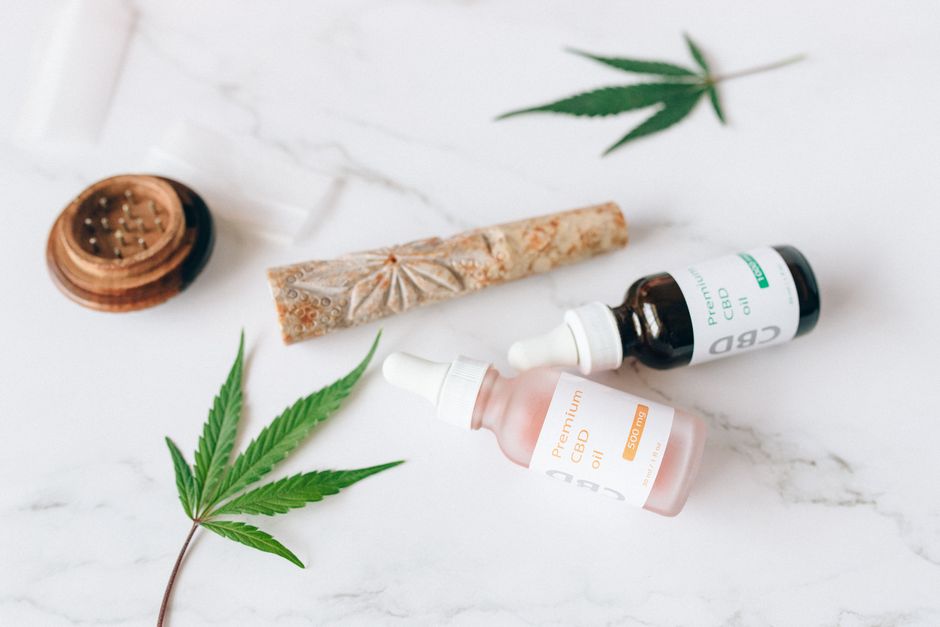
Broad-Spectrum CBD for Military Members: Is It Safer for Testing?
Broad-spectrum CBD is often marketed as a middle ground: it may contain CBD and other hemp compounds, but the manufacturer says it has no THC. For military members, that can sound like a safer option than full-spectrum CBD. The important distinction is that “safer” does not mean safe for a military drug test—or permitted under military rules.
Military drug testing CBD questions deserve a cautious answer. A product’s label cannot guarantee what is in every bottle, and a test result can have serious consequences even when someone did not mean to use THC. Service members should check current rules with their chain of command or appropriate military health and legal resources before considering any CBD product. This article is general information, not permission to use one.
The short answer
Broad-spectrum CBD is generally made to remove THC, which may reduce the chance of THC exposure compared with full-spectrum CBD. But “THC-free” on the front of a package is not proof that a product contains zero THC, and even a batch-specific certificate of analysis (COA) cannot make a product risk-free. A COA is a laboratory report for a particular batch; it shows what the lab detected in the sample tested, not what a military drug test will find in a person.
For active-duty personnel, the most practical takeaway is straightforward: do not treat broad-spectrum or isolate CBD as a way around drug-testing rules. Military policies can be stricter than general consumer laws, and service members should verify the current policy that applies to them.
CBD types: broad-spectrum, full-spectrum and isolate
CBD, or cannabidiol, is one of many compounds found in the cannabis plant. Hemp-derived CBD products are sold in several forms. Labels use these terms to describe the mix of compounds the manufacturer says is in the product.
Product type What it generally means THC and testing considerations Full-spectrum CBD Contains CBD and may contain other hemp compounds, including THC. Highest concern of these three for unintended THC exposure. The amount can vary by product and batch. Broad-spectrum CBD Contains CBD and may retain some other hemp compounds; the maker says THC has been removed. May reduce THC exposure, but removal claims need to be checked against a current, batch-specific COA. “Not detected” is not the same as proof of absolute zero. CBD isolate CBD has been separated from most or all other plant compounds. Designed to contain CBD without other cannabinoids, but contamination, labeling errors or manufacturing problems remain possible.These are general descriptions, not regulated guarantees of purity. A company’s product name does not substitute for the ingredient list and lab report.
What “THC-free” does—and doesn’t—tell you
THC-free CBD is in demand among people who want CBD without the intoxicating effects associated with THC. For a service member, though, the key question is not only whether a brand makes that claim. It is whether the exact product and batch were tested, what the results say, and whether using the product is allowed under the applicable rules.

Drug tests typically look for THC or its metabolites—not for a person’s reason for taking a product. A product labeled broad-spectrum or THC-free may still create uncertainty if it contains trace THC, is inaccurately labeled, or has been contaminated during production. Repeated use may also mean repeated exposure. No label or consumer COA can promise that a person will pass a test.
Military members should also distinguish between what is legal for the general public and what is permitted in service. The 2018 Farm Bill changed the federal definition of hemp and removed hemp meeting the legal THC limit from the federal definition of marijuana. That change helped CBD products move into pharmacies, grocery stores and online shops. It did not automatically make CBD use acceptable for every workplace, profession or military role. Check current Department of Defense and service-specific guidance rather than relying on a retailer’s description of federal hemp law.
Why broad-spectrum is not a testing guarantee
Broad-spectrum products go through processing intended to remove THC while retaining CBD and, depending on the product, some other plant compounds. Whether that process succeeds can depend on the starting material, equipment, technique and quality controls. The final product may also vary from one batch to another.
Manufacturers may use methods such as chromatography or other separation and refinement steps to reduce or remove particular compounds. Those steps are only part of the picture. A responsible maker should test the finished product—not merely the raw hemp extract—and should have controls to prevent cross-contamination during manufacturing, storage and packaging.
A COA checklist for cautious shoppers
A certificate of analysis (COA) is a lab report that lists results for a tested sample. It is useful evidence, but it is not a safety certificate or a guarantee about your body’s test result. Before relying on one, check:
- Batch match: Does the report show the same lot or batch number as the package?
- Recent, independent testing: Is the lab identified, and does the report appear to come from a laboratory independent of the brand?
- Full cannabinoid panel: Does it report THC clearly, including the relevant THC forms, rather than simply saying “pass”?
- Detection limits: Does the report explain the lab’s limit of detection or quantification? “Not detected” means below that lab’s measurement threshold—not necessarily absolute zero.
- Finished-product results: Was the product in its final form tested, or only an ingredient used to make it?
- Other contaminants: Does the report cover relevant checks such as pesticides, heavy metals, solvents and microbial contamination?
If a QR code leads to a generic report, the batch number is missing, or the report does not show THC results, treat the claim as unverified. A polished package is not a substitute for documentation.
The entourage effect, in plain English
The “entourage effect” is the idea that CBD and other compounds from hemp may work differently together than they do alone. That hypothesis helps explain why some companies promote broad-spectrum or full-spectrum formulas instead of CBD isolate. In one sentence: it is a proposed combined effect of multiple plant compounds, not proof that a product works better for a particular person.
Research on CBD is still developing, and marketing often states the entourage effect more confidently than the evidence supports. It also does not make THC exposure irrelevant. A product’s possible benefits do not cancel out drug-testing risk or military policy.
Why CBD became a mainstream retail product
After the 2018 Farm Bill, hemp-derived CBD became far more visible to shoppers, with products appearing in familiar retail settings and a wide range of formats. That shift encouraged more people to ask about ingredients, sourcing and quality. It also created a crowded marketplace where claims can be difficult to compare.
CBD products are not all reviewed or approved by the FDA as treatments for common aches, sleep concerns or stress. Be wary of promises to cure disease or of claims that a product “works instantly.” If you take prescription medicine, ask a qualified clinician or pharmacist about possible interactions. A product’s hemp origin does not remove the need for that conversation.
What about price?
This article does not list product prices because no verified prices were provided in the source material. Inventing a price range—or presenting an old retailer listing as current—would not help readers make a sound comparison. Prices can vary by serving size, CBD amount, format, retailer and testing practices.
If you are comparing products, look beyond the bottle price. Check the amount of CBD per serving, the number of servings, and whether the brand provides bocaratontribune.com a COA for the exact batch. A higher price does not prove better quality, and a low price does not by itself prove a product is unsafe. For military members, however, a favorable price or detailed COA still cannot establish that CBD use is allowed or eliminate testing risk.
Practical steps for military members
- Check the rule before buying. Ask an appropriate military authority or consult current official guidance about CBD and hemp products. Do not assume rules are the same across services or circumstances.
- Do not rely on “THC-free” alone. If a product is being considered despite the risks, verify a batch-specific COA and read the actual THC results. That still is not a guarantee.
- Keep the package and report. Documentation may help establish what a product claimed to contain, but it does not guarantee a particular test outcome or excuse a policy violation.
- Ask a clinician or pharmacist about health questions. CBD can interact with some medications and may cause side effects. Do not stop a prescribed treatment in favor of an unverified supplement.
- When in doubt, skip it. For someone subject to military drug testing, avoiding CBD products is the most cautious way to avoid product-related THC exposure.
Bottom line
Broad-spectrum CBD is intended to contain less—or no—THC compared with full-spectrum CBD, but that intention is not a promise of zero exposure. A batch-specific COA and sound lab testing can help assess a product’s contents; they cannot guarantee a negative military drug test. Since military rules may be stricter than general hemp laws, service members should confirm current policy before using CBD. When the stakes include a career and a test result, the safest assumption is that “THC-free” is a claim to verify, not a guarantee to trust.